Animation7 min read
Motion-Comic Expressions: Write How Emotion Changes, Not Just “Happy” or “Sad”
Map expressions to before, during, and after—suppression, strain, then quiet release.

Motion-comic prompts often stop at happy, angry, sad, surprised, crying. That yields a face, not a beat. Story emotion usually has a prior hold, a middle break, and a later fall.
A character who wants to laugh but cannot is already dramatic—not simply happy. The reaction is rising; control remains. Mouth may twitch; eyes shift; she still holds the line.
Suppressing Laugh Expression
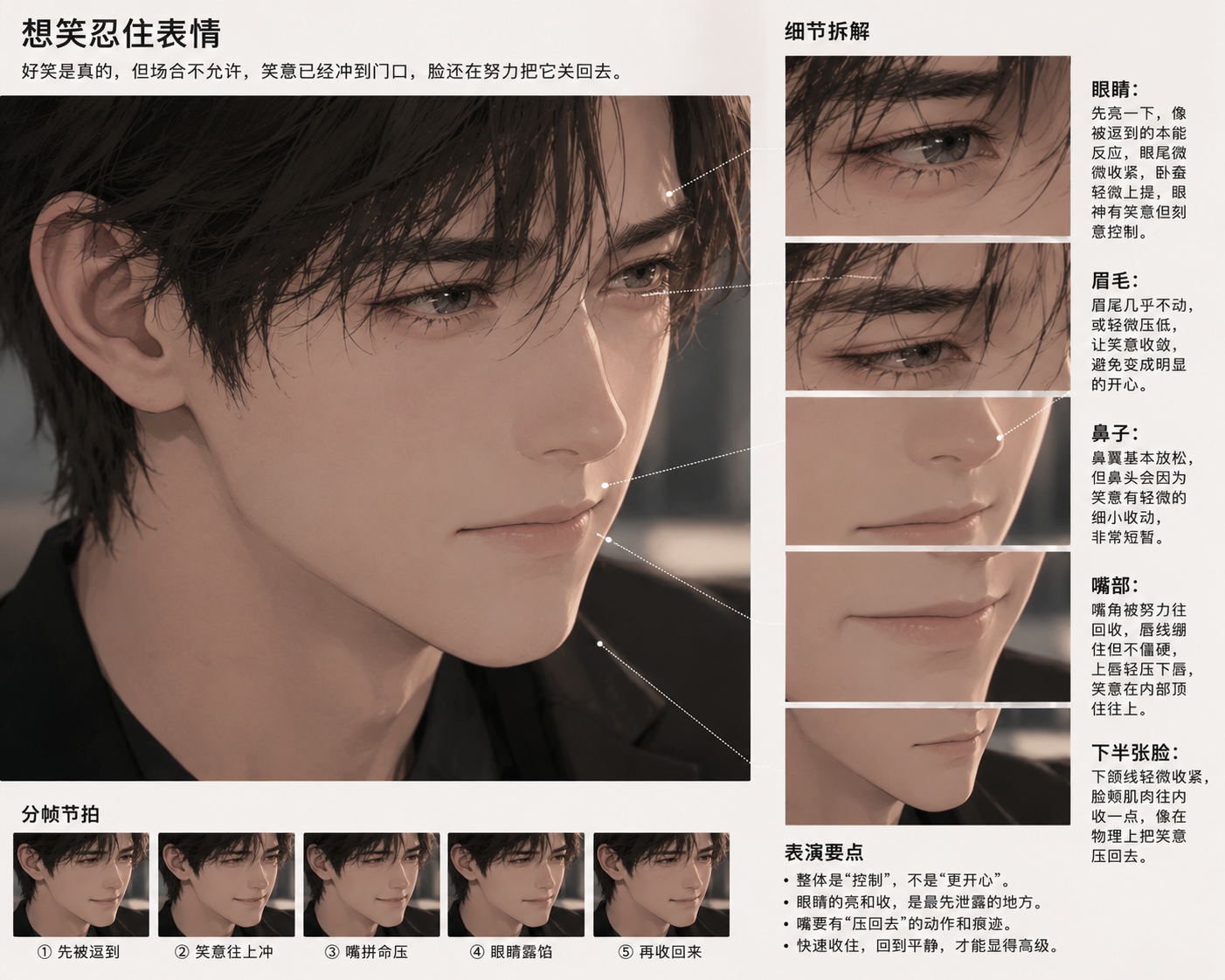
Suppressing Laugh Expression
Before state — emotion visible, not fully exposed. Fits ambiguity, awkwardness, testing, stubborn charm, secret delight.
Then strain builds. Jaw tightens; eyes sharpen; the face enters open resistance—not raw rage, but holding on.
Gritted Determination Expression
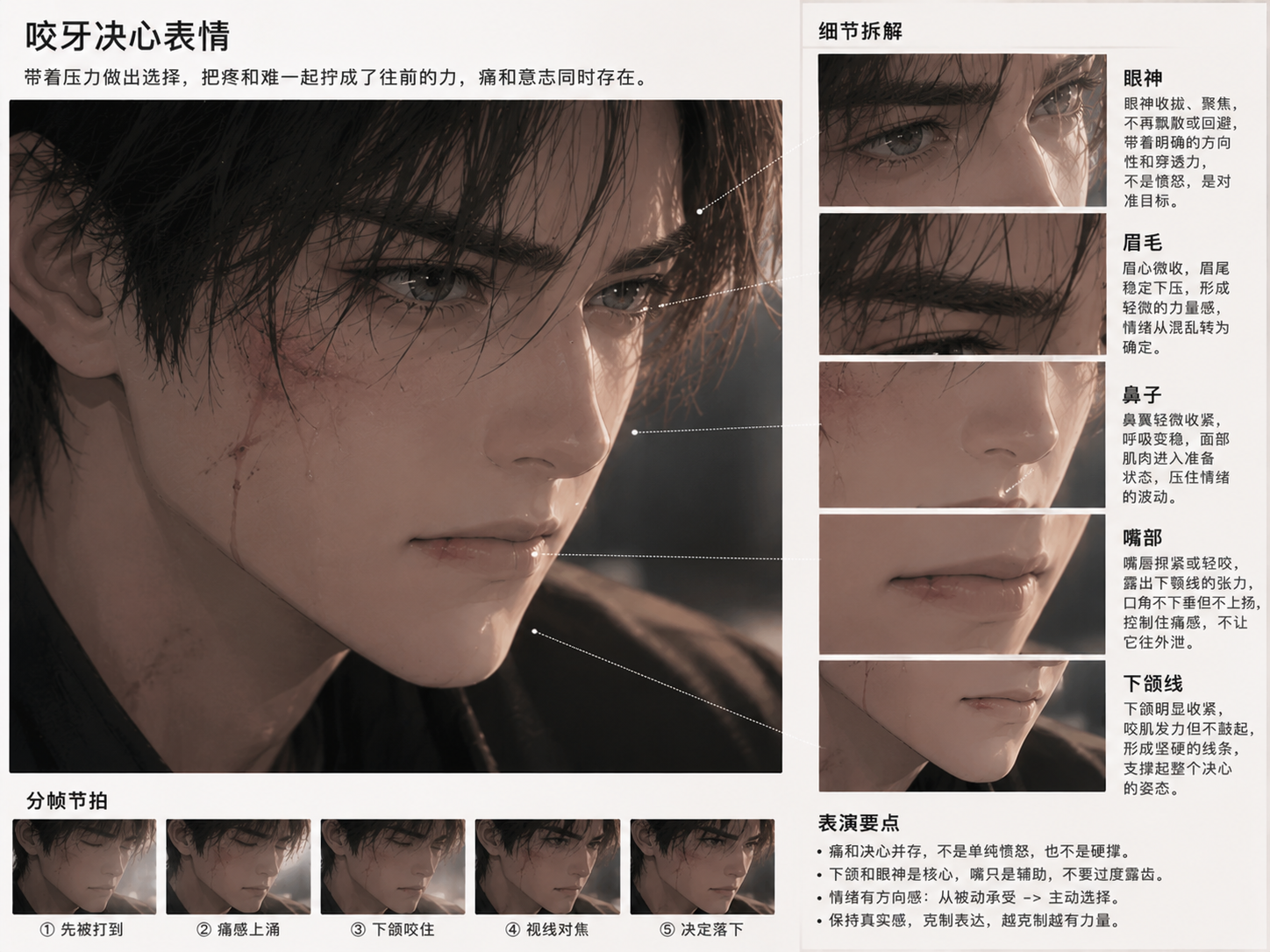
Gritted Determination Expression
During state — pushed tight, still fighting. Conflict, endurance, resolve, near-break without surrender.
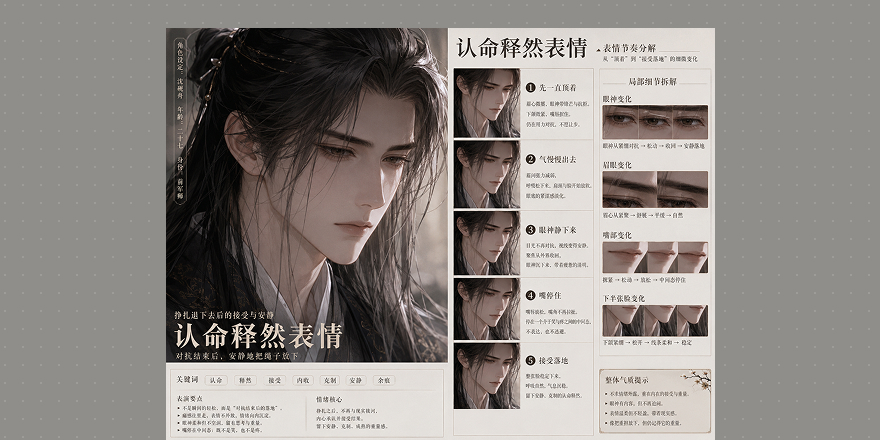
Finally, release. Resignation, a breath out, or emptiness after tears. This stage needs less exaggeration; quiet often carries more.
Resigned Release Expression

Resigned Release Expression
After state — not the peak, but what remains. Reconciliation, letting go, exhaustion, accepting reality.
Do not use one emotion word alone. Ask where this face sits in the scene. “Sad” at hold, burst, and aftermath are different faces. So is “happy”: secret joy, suppressed laugh, full laugh, shy afterglow.
In Draftroom, pick Expression cards in order—before, during, after. You get a beat, not three isolated thumbnails.
Expressions are not decoration. They show the audience how feeling moves step by step.